By : Daniel Kasputra
The fame of Bandung was undeniable for itscity planning and nature during colonial time, and Dutch living in Bandung called it as Parijs vaan Java to show how this city was well-organised, beauty and fresh. Both his advantages lead its position as one of leading city to be visited during colonial tim. Taking only few years with the help of Bandoeng Voorouit, the city was visited by many people amd it become modernised.
Its main destination located in two natural sources surrounding the city, mountains and hills. This two were the favouriteamong the visitor. Most of them spend pg their time on visiting many places provided by this blessing land. In tur, Bandung was one of leading in itsnatural tourisme destination.
This article will, briefly, highlightmountains and hills in Bandung as main sites for natural tourisme in Bandung during the rarly twenty century.
- Gunung Tangkuban Perahu
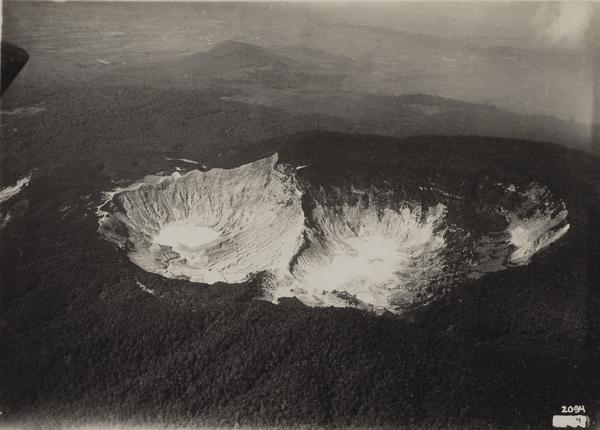
Located in the northern part of Bandung, Takuban Perahu was the most visited places among other place in Bandung. Its accessible andreachable location was the key elemnt making this place as favourite. More than just easy to access, the diversity of its sites was other point to attract peopple to visit, especially its number of volcanic craters and hot water bathing that was also scattered surrounding them. Mooi Bandoeng (September 3, 1934:45), one of tourism magazine at the tim, mentioned five beautiful craters was their natural scenery in Septmber 3 1934. They were Upas, Ratu, Djoerig, Siloeman, Djarian, and Ecoma craters.
Hot bathimgwater was also favorite, many of tourist from Europe and Japan, searched for its benefit for its efficiency from the sulphur water andits relaxing experiences. Here Mooi Bandoeng (January 7, 1936: 104) mentioned Kampung Tjikidang was one to be mentioned from many places as such.
Ciwidey
Source : Leiden University Libraries Digital Collections
Picture 1. THE CRATERS OF TANGKUBAN PERAHU. All over the plateu Bandung, Tangkuban Perahu craters had been considered as favorite destination of Bandung natural Tourism. In this image, Tangkuban Perahu Craters about 1930s with its exotic white surface.
- Ciwidey
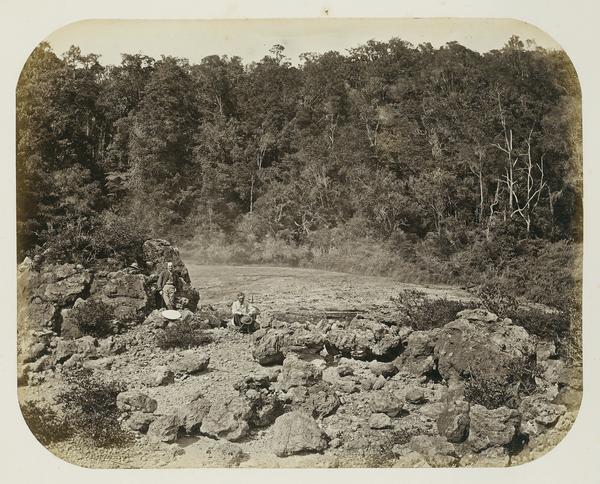
At the same time from Mooi Bandoeng Magazine to De Gids Midden Priangan, we knew that Ciwidey was the most favourite for tourist providing beautiful and exotic panorama of mountain. And of all those beautiful panorama’s most recomended was the tourism to Kawah Putih. The place lies in an area that formed exotic volcano circle with white sulphurs (Mooi Bandoeng, March 9, 1935:12). The place also provided abundant hotels as well as pasanggrahan that was supported reachable access.
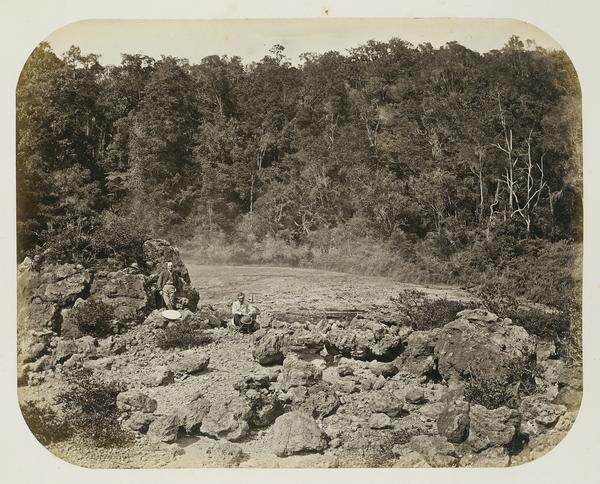
Source : Leiden University Libraries Digital Collections
- Pengalengan
Its passanggrahan was private dan built for his own Ciwidey. It located in remote area of northern Bandung. So there was no people acknowledge this. However the more people know this place, the more people visit like Ciwidey, Pangalengan provided tourists with a landscape of mountain covered with the green and fertile tea estates. But as other mountain destination in Bandung Plateau, volcanic craters still was important natural tourism destination which offered warm and exotic white sulphur . As we could see the guide book of Tourism ” De Gids Bandoeng en Midden Priangan” (Hoogland, 1926:65) displayed a guide of travels to Kawah Wayang, as we saw this below
Van Pangalengan volge men den z. g. Syndicaatsweg tot 1,5 K. m van dat dorpje het ravijn der Tjibeureum, is overgetrokken. Een goede autoweg 4 K. M lang, voert van hier naar de kinaonderneming Kertamanah, welke onderneming men ook van Tjinjiroean uit kan bereiken, en wel langs de onderneming Tjibeureum met haar bekende warme bron en oude nog door Junghuhn geplannte kinaboomen. Vanaf den eerstgeneomden weg naar Kertamanah heeft men het uitzicht op den scherpgeteekenden Gamboeng, Goenoeng Bedil, Wajang en Windoe, welke in de vlakte vooruitspringen.
After the Wajang Crater, there was also a beautiful place. The name of place was Talaga Patenggang. When Reitsma published his work in 1927 (Reitsma, 1926:47), the place offered the beauty of its little island as well as the swimming tourism. We had heard that a little island on the central of lake where Junghuhn stayed and wrote a most of his work “Licht en Schaduwbeelden” was its most predominant tourism destination. Meanwhile in the second place was that tourists was also permitted to swim on the side which had the depth about 5 m (Hoogland, 1926:79).
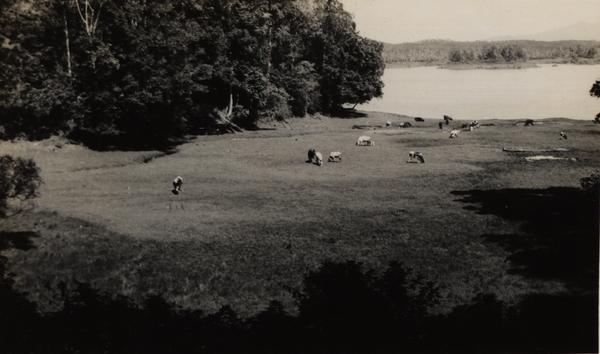
Source : Source : Leiden University Libraries Digital Collections
- Gunung Papandayan
Some place that promoted and designed to be tourism spot was Gunung Papandayan. Presiding in the Southern of Bandung plateau, this place was recommended by Bandoeng Vooruit as other destination. This organization moreover facilitated by build way and access to the mountain in 1930 to 1936 (Mooi Bandoeng, February, 1936:113). Accordingly Kawah Papandajan come to the list of tourism destination.
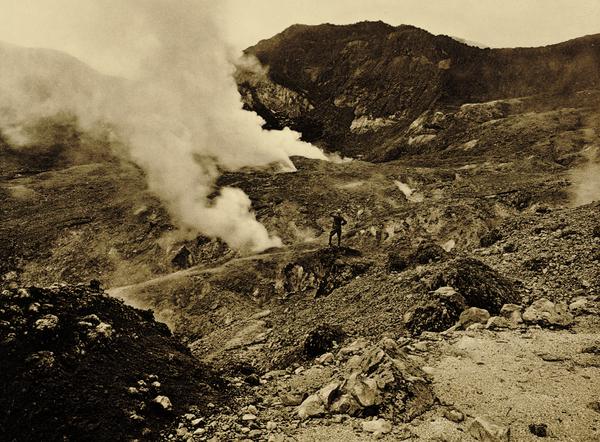
Source : Leiden University Libraries Digital Collections
- Curug Dago
By the middle of the twentieth century, its cool and beautiful pictures of Curug Dago appeared on tourism magazines and tourism guiding books. As we could saw in the Mooi Bandoeng (June, 1934:187) the place in the Korte Berichten column. The columns contained a brief and interesting description the place which initiated its description with a guide of travels and ended with the material origin of the waterfall. To be more clear, we could read the above notes on the below description
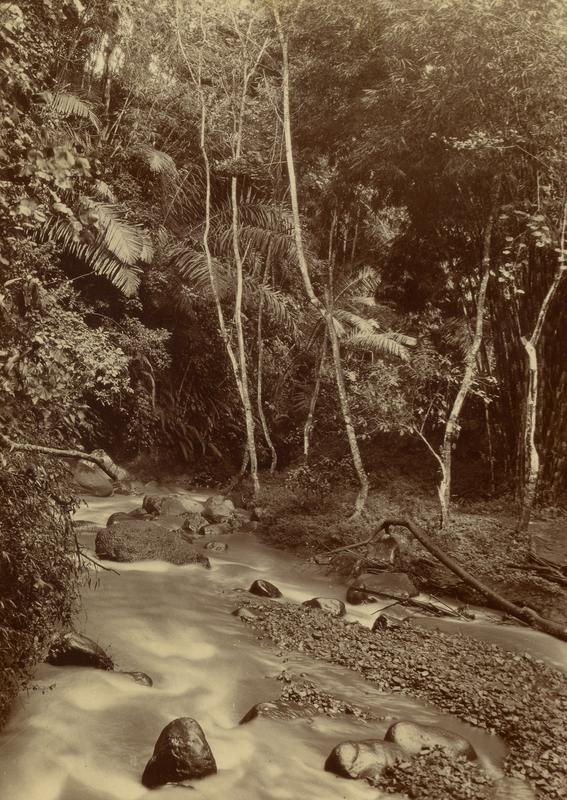
Sources : Source : Leiden University Libraries Digital Collections
Tot de kleine, maar aardige en de moeite loonende uitstapjes, welke van Bandung van Bandoeng uit te maken zijn, behoort ongetwijfeld een tocht naar de Dago waterval. Wandelende doet men er een drie kwartier over en met de auto is het slechts een minuut of tien tot het theehuisje Dago”, van waar men dan, te voet, in enkele minuten bij de val kan komen. Een idyllisch plekje om wat tijd in een dolce far niente zoek brengen. De Dago Waterfall (ongeveer 820 m. Boven zee) wordt gevormd door een andesietlavastroom, welke van de Tangkoeban Prahoe afkomstig is. Dit andesiet gesteente is zeer hard en het water der Tjikapoendoeng is nog niet in staat geweest om het door te knagen en valt daarom over enkele 10 tallen meters naar beneden
- Gunung Manglayang
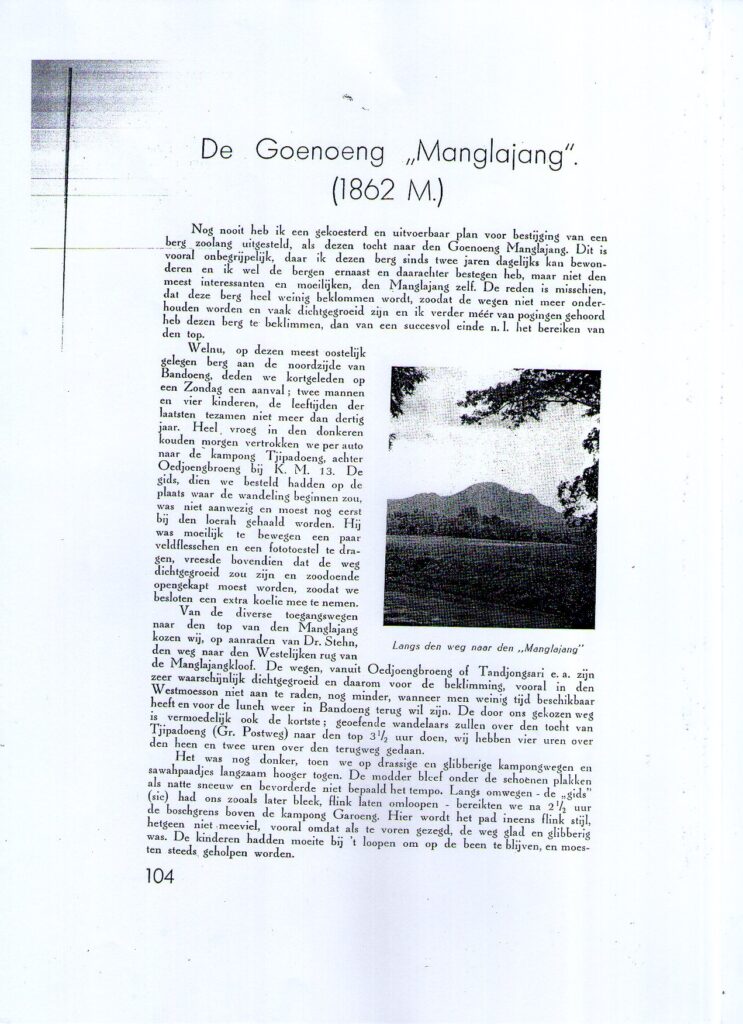
In the far corner of the Bandung plateau, an old string of Ujungberung’s hillness streched across the Daendels Post-Weg which connected Bandung with the low northern coastal cities of Java. There Gunung Manglayang take a seat as one of the natural tourism destination in Bandung. Though the place was seemly unfamiliar than Pangalengan and Ciwidey or Tangkuban Perahu. But in Mooi Bandoeng (January, 1936:105) it offered a climbing tourism which initiated its route in Tanjung Sari and Cipadung.
Conclusion
Far from being imagined, Bandung in era colonial rapidly developed from a remote hilly and montainous city in Priangan plateau to a modern natural tourism city. Its destinations was best and fame with mountains and hilness surounding it as the main source of its offered captivation. From the full-mystical and beautiful Tangkuban Perahu to the tea covered green Ciwidey those were the most visited. No wonder Europeans remembered as Parijs van Java.
Hoogland, W. H & S. A. Reitsma. Gids van Bandoeng Midden Priangan. Bandoeng:Vorkrink, 1926.
Reitsma, S. A. Bandoeng:The Mountain City of Netherlands Indies, 1926.
Mooi Bandoeng, June 1934.
Mooi Bandoeng, March 1935
Mooi Bandoeng, January 1936
Mooi Bandoeng, September 1936
Leave a Reply