The fame of Bandung was undeniable for itscity planning and nature during colonial time, and Dutch living in Bandung called it as Parijs vaan Java to show how this city was well-organised, beauty and fresh. Both his advantages lead its position as one of leading city to be visited during colonial tim. Taking only few years with the help of Bandoeng Voorouit, the city was visited by many people amd it become modernised.
Its main destination located in two natural sources surrounding the city, mountains and hills. This two were the favouriteamong the visitor. Most of them spend pg their time on visiting many places provided by this blessing land. In tur, Bandung was one of leading in itsnatural tourisme destination.
This article will, briefly, highlightmountains and hills in Bandung as main sites for natural tourisme in Bandung during the rarly twenty century.
Gunung Tangkuban Perahu
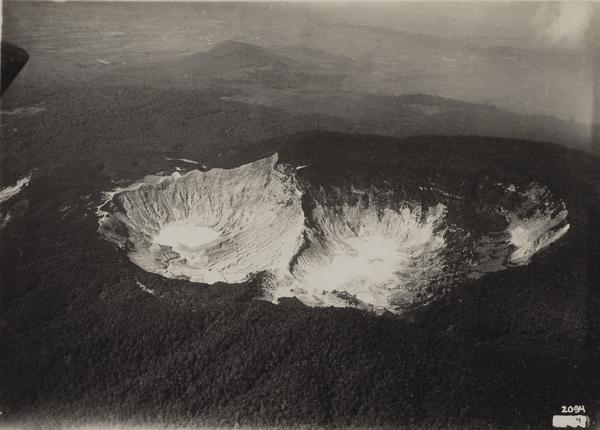
Located in the northern part of Bandung, Takuban Perahu was the most visited places among other place in Bandung. Its accessible andreachable location was the key elemnt making this place as favourite. More than just easy to access, the diversity of its sites was other point to attract peopple to visit, especially its number of volcanic craters and hot water bathing that was also scattered surrounding them. Mooi Bandoeng (September 3, 1934:45), one of tourism magazine at the tim, mentioned five beautiful craters was their natural scenery in Septmber 3 1934. They were Upas, Ratu, Djoerig, Siloeman, Djarian, and Ecoma craters.
Hot bathimgwater was also favorite, many of tourist from Europe and Japan, searched for its benefit for its efficiency from the sulphur water andits relaxing experiences. Here Mooi Bandoeng (January 7, 1936: 104) mentioned Kampung Tjikidang was one to be mentioned from many places as such.
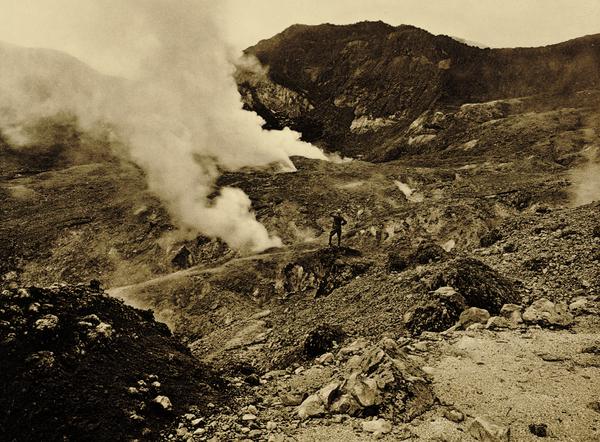
Picture 1. THE CRATERS OF TANGKUBAN PERAHU. All over the plateu Bandung, Tangkuban Perahu craters had been considered as favorite destination of Bandung natural Tourism. In this image, Tangkuban Perahu Craters about 1930s with its exotic white surface. Ciwidey
Source : Leiden University Libraries Digital Collections
Picture 1. THE CRATERS OF TANGKUBAN PERAHU. All over the plateu Bandung, Tangkuban Perahu craters had been considered as favorite destination of Bandung natural Tourism. In this image, Tangkuban Perahu Craters about 1930s with its exotic white surface.
Ciwidey
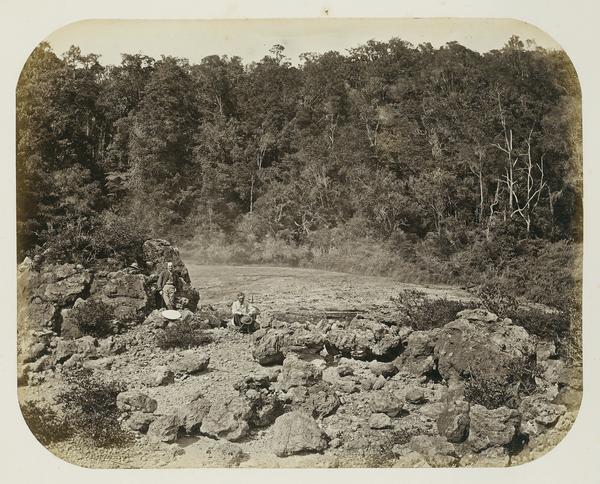
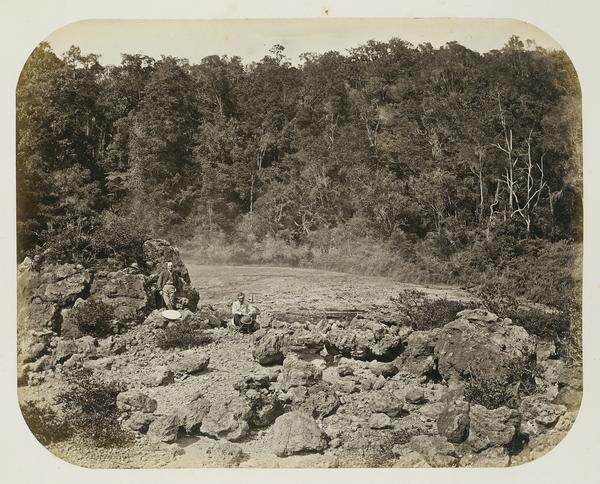
At the same time from Mooi Bandoeng Magazine to De Gids Midden Priangan, we knew that Ciwidey was the most favourite for tourist providing beautiful and exotic panorama of mountain. And of all those beautiful panorama’s most recomended was the tourism to Kawah Putih. The place lies in an area that formed exotic volcano circle with white sulphurs (Mooi Bandoeng, March 9, 1935:12). The place also provided abundant hotels as well as pasanggrahan that was supported reachable access.
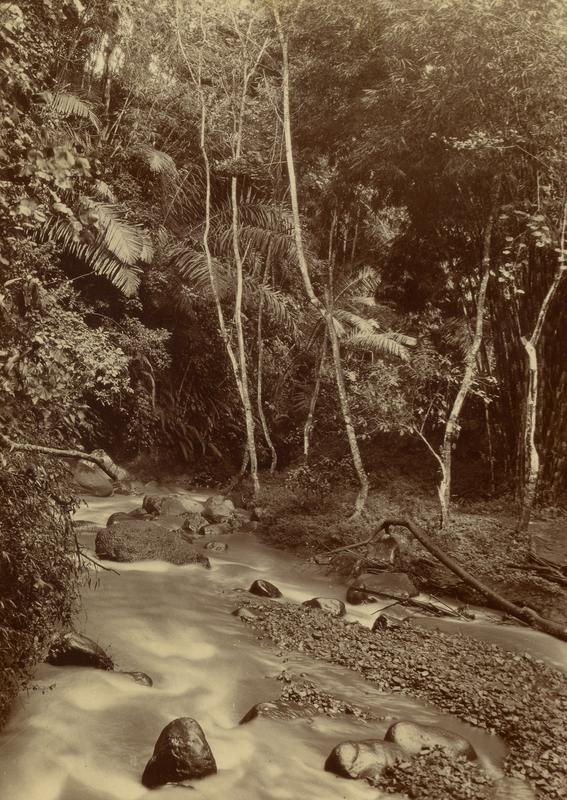
Picture 2. Two Photographers , Woodbury and Pages were in the Ciwidey kawah
Source : Leiden University Libraries Digital Collections
Pengalengan
Its passanggrahan was private dan built for his own Ciwidey. It located in remote area of northern Bandung. So there was no people acknowledge this. However the more people know this place, the more people visit like Ciwidey, Pangalengan provided tourists with a landscape of mountain covered with the green and fertile tea estates. But as other mountain destination in Bandung Plateau, volcanic craters still was important natural tourism destination which offered warm and exotic white sulphur . As we could see the guide book of Tourism ” De Gids Bandoeng en Midden Priangan” (Hoogland, 1926:65) displayed a guide of travels to Kawah Wayang, as we saw this below
Van Pangalengan volge men den z. g. Syndicaatsweg tot 1,5 K. m van dat dorpje het ravijn der Tjibeureum, is overgetrokken. Een goede autoweg 4 K. M lang, voert van hier naar de kinaonderneming Kertamanah, welke onderneming men ook van Tjinjiroean uit kan bereiken, en wel langs de onderneming Tjibeureum met haar bekende warme bron en oude nog door Junghuhn geplannte kinaboomen. Vanaf den eerstgeneomden weg naar Kertamanah heeft men het uitzicht op den scherpgeteekenden Gamboeng, Goenoeng Bedil, Wajang en Windoe, welke in de vlakte vooruitspringen.
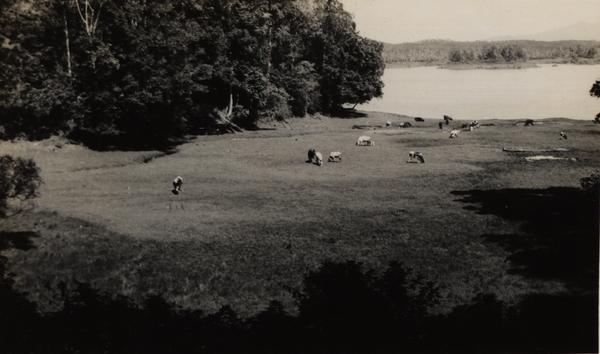
After the Wajang Crater, there was also a beautiful place. The name of place was Talaga Patenggang. When Reitsma published his work in 1927 (Reitsma, 1926:47), the place offered the beauty of its little island as well as the swimming tourism. We had heard that a little island on the central of lake where Junghuhn stayed and wrote a most of his work “Licht en Schaduwbeelden” was its most predominant tourism destination. Meanwhile in the second place was that tourists was also permitted to swim on the side which had the depth about 5 m (Hoogland, 1926:79).
Picture 3. Of all the favorite tourism spots of Pangalengan that scattered between Patuha mount and Wayang mount. None is more favorite than Talaga Pategang. It was volcano lake formed by an old-eruption.
Source : Source : Leiden University Libraries Digital Collections
Gunung Papandayan
Some place that promoted and designed to be tourism spot was Gunung Papandayan. Presiding in the Southern of Bandung plateau, this place was recommended by Bandoeng Vooruit as other destination. This organization moreover facilitated by build way and access to the mountain in 1930 to 1936 (Mooi Bandoeng, February, 1936:113). Accordingly Kawah Papandajan come to the list of tourism destination.
Picture 4. Papandayan Mount. Pictured here in the 1930s, is today more famous as the tourism landmark of a small town, Garut. But from 1935 to 1942 this was the main and favorite natural tourism destination of Bandung. One of the natural tourism landmark Bandung after Tangkuban Perahu mount.
Source : Leiden University Libraries Digital Collections
Curug Dago
By the middle of the twentieth century, its cool and beautiful pictures of Curug Dago appeared on tourism magazines and tourism guiding books. As we could saw in the Mooi Bandoeng (June, 1934:187) the place in the Korte Berichten column. The columns contained a brief and interesting description the place which initiated its description with a guide of travels and ended with the material origin of the waterfall. To be more clear, we could read the above notes on the below description
Picture 5. Curug Dago between 1920 and 1930.
Sources : Source : Leiden University Libraries Digital Collections
Tot de kleine, maar aardige en de moeite loonende uitstapjes, welke van Bandung van Bandoeng uit te maken zijn, behoort ongetwijfeld een tocht naar de Dago waterval. Wandelende doet men er een drie kwartier over en met de auto is het slechts een minuut of tien tot het theehuisje Dago”, van waar men dan, te voet, in enkele minuten bij de val kan komen. Een idyllisch plekje om wat tijd in een dolce far niente zoek brengen. De Dago Waterfall (ongeveer 820 m. Boven zee) wordt gevormd door een andesietlavastroom, welke van de Tangkoeban Prahoe afkomstig is. Dit andesiet gesteente is zeer hard en het water der Tjikapoendoeng is nog niet in staat geweest om het door te knagen en valt daarom over enkele 10 tallen meters naar beneden
Gunung Manglayang
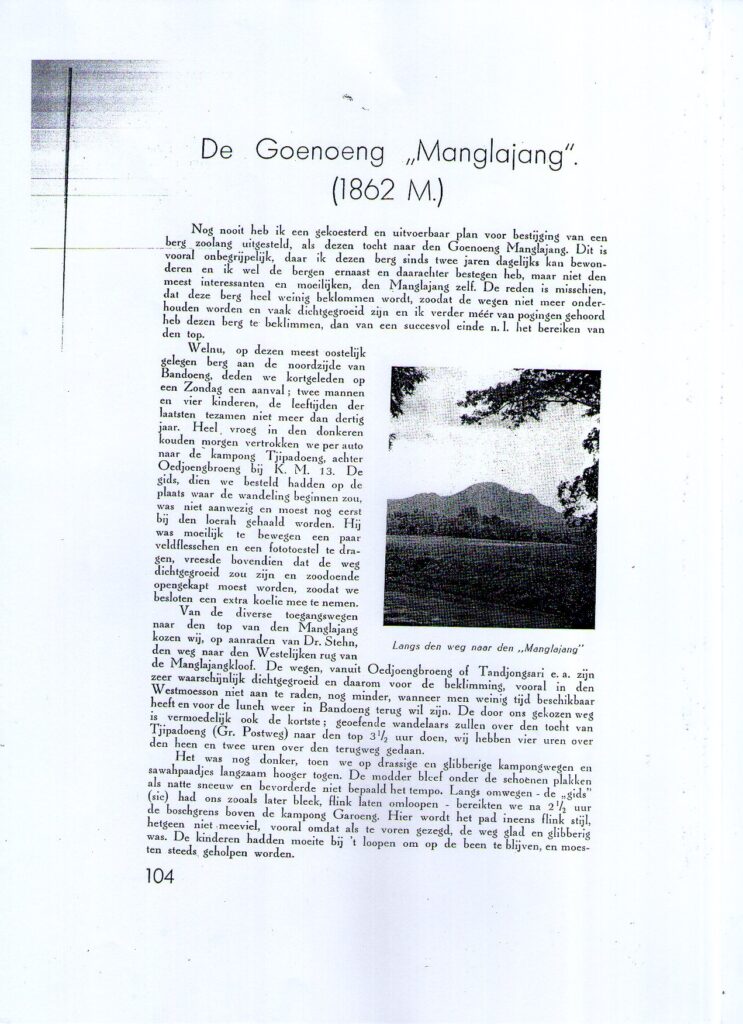
Picture 6. Manglayang Mount appeared in Mooi Bandoeng, a tourism magazine that was published 1930s.
In the far corner of the Bandung plateau, an old string of Ujungberung’s hillness streched across the Daendels Post-Weg which connected Bandung with the low northern coastal cities of Java. There Gunung Manglayang take a seat as one of the natural tourism destination in Bandung. Though the place was seemly unfamiliar than Pangalengan and Ciwidey or Tangkuban Perahu. But in Mooi Bandoeng (January, 1936:105) it offered a climbing tourism which initiated its route in Tanjung Sari and Cipadung.
Conclusion
Far from being imagined, Bandung in era colonial rapidly developed from a remote hilly and montainous city in Priangan plateau to a modern natural tourism city. Its destinations was best and fame with mountains and hilness surounding it as the main source of its offered captivation. From the full-mystical and beautiful Tangkuban Perahu to the tea covered green Ciwidey those were the most visited. No wonder Europeans remembered as Parijs van Java.
Hoogland, W. H & S. A. Reitsma. Gids van Bandoeng Midden Priangan. Bandoeng:Vorkrink, 1926.
Reitsma, S. A. Bandoeng:The Mountain City of Netherlands Indies, 1926.
Perhaps historians, tourists, readers have long perceived that Indonesia tourism rooted to the twentieth-century colonial tourism. Most of them still refers to the concept of free time as one of the basic requirement for the development of tourism and point out that the middle of nineteenth century is the most apprioate time to consider the emergence of tourism as a modern-day phenomenon (2014:100). In the fact, it a was a full questioned perception. No one account that tourists did not exist back in the ancient times (2014:99). Much evidences of travels was made for various reasons and motives such as Trading, power, etc. But due to the tourism term just was born when leisure developed in the capatilsm-era, so that lthe special-purpose travel was the precise name to mention this activities.
The special-purpose travel in the ancient Indonesia are the subject of this article. In first part I displayed how trade related travels as one of the special porpuse travel (old-tourism) activities in ancient Indonesia times. In the second part of this paper, I explains concern the travel made for a power. In fact, beside both example still were many special purpose-travel that made by Indonesian in the ancient times. But i was more focused to those two type based my own source.
Travel for a trade
Of the travelers that wrote its early name in the realms of Indonesia history, none is more old and important than merchants. As ancient greek merchants, Indonesia merchants were also the first who left or their own will (2014:100). Commercial motive was main motive with sea routes as a favorite for the safety and fluecny.
Picture 1. Indonesian maritimes boats had travelled and sailed through sea less or more a millenium ago. (The images was an old-relief of magnificent Borobudur temples dates around the IX century).
The earlier evindence of Indonesia merchants travel was beautifully carved on a old-exotic maritime boats relief of Borobudur temples that dates back around the 9-th century (1992:200). Unfortunately, no one knows how far ancient Indonesia had sailed. The remained evidences was a few that was on the hand. However, at least, we knows that around a millenium ago, ancestor had travelled and seemly taken part in the international-comercila traffic. As Herman Burger (2011:1) storied in his work De Garoeda en De Ooievar that “…..waren er ook zeevart en handel een belangrijke inkomsten vormden. In de loop van de eeuwen ontwikkelde zich een levendig handelsverkeer, zowel binnen de archipel als met andere delen van Azie, zoals China, India en Perzie…. “
From the Portugues, far in the early of the sixteenth century, the tight veil of darkness how far the Indonesian travel little by little opened. Summa Oriental, one of monumental work written by a Portuguese apothecary, Tome Pires (1990:50) that reported us that there is much Indonesia merchants in the Portuguese occupied port of Malacca, “…….men of Tanjompura, Laue, Banka, Linga, Moluccas, Banda, Timor, Madura, Java, Sunda, Palembang, Jambi, Tongkal, Indrangiri, Kapatta, Menangkabau, Siak, Arqua, Aru, Bata, country of Tomjano, Pase, Pedir, Maldives… “.
In the Pires’s Account formed a clue : first, the existence of Indonesian in the Portueguse malacca port, gives us a impression that Indonesian merchants in the sixteenth centuries had travelled and accrossed sea as far as Malacca. The second, a wonderful impression appeared concerned the Indonesia merchant’s travel that made them taken part in global trading-traffic in the sixteenth century.
In the same time, river’s route enjoyed a great advantage. Their was well deserved a intermediatery between crowded and advance coastal Javanese area and mysterious Javanese hinterland. Merchants of the 15th century would like to travel by the route. Demak in the early of fifteenth century, a rich capital and harbor of Demak Dynasty was a most representative example about how river played a dominant role in traffics of goods and merchants (1974:35).
Travel for a power
It is a commonplace that as early as times Indonesia made a travel for the search of a power. We found in Babad Tanah Jawi, a book of javanese-kings chronic that appeared in the early of the seventeenth century that there are two purpose how then the travel made. The first was to search a new territory for the building of a new kingdom of Dynasty. This is represented by the legendary story of Raden Fatah. Meanwhile, in the second place, was the purpose for a legistimation of power. The full-legendary and myhtical travel of the Islamic-Mataram ruler, Panembahan Senapati represented this.
According to Babad Tanah Jawi, after years his service on a pious muslim saint or wali, Sunan Ampel, the legendary Demak ruler, Panembahan Jin Bun or Raden Fatah before he rise on the throne. He married a dochter of the saint and set out towards the west to find a place that had the fragrant ground. The saint forecast that there the future-Dynasty of the price would be built, “Sesusah menikah, Raden Patah disarankan oleh Sunan Ampel untuk berjalan ke arah barat dan mencari tempat yang beraroma harum. Tempat beraroma harum itu bernama hutan bintara. Kelak hutan bintara itu akan menjadi kerajaan bernama Kasultanan Demak Bintara” (2013:72).
On one side, this story suggests us that the travel purely was made for the purpose of building for a new territory, without a friction or conflict, whole seemed the peace. However, on other side, seen from the context of the 15th century, this travel reflected a struggle over the competence and power, more than filling a purpose to build a new land. Majapahit as the patron of Hindu-Budhist culture still existed. Although the Dynasty was on the critism when its subjects were especially the Northern-coastal rulers separates and converted to the Islam. Therefore, a conclusion appeared that the order of Sunan Ampel to Raden Fatah for the search of a new land was to build a land that in the future able to competence the old Majapahit. It was prove with events that occured in the later years.
Meanwhile, in the second place was a purpose that reflected the travel for a legistimation of power. The story of myhtical travel of an Islamic-Mataram Dynasty ruler, panembahan Senopate in the middle of the sixteenth century represented this model. Babad Tanah Jawi told us that Senopati Ingalaga as he was callled in that book, and also the an ancestors of today Yogyakarta and Surakarta kings travelled to Parangtritis in the south of modern-day Yogyakarta. On top a holy rocky, he meditated and received a spiritual vision that was pictured by a beautiful goddess in the Javanese paints. Javenese tradition remembered an encounter Senapati with a Northern-ocean ruler, Kanjeng Ratu Kidu. The detailed description of his travel written this below,
“…Dari Lipura, Senapati Ngalaga mendaki gunung Merapi. Dari Gunung Merapi, Senapati Ngalaga berjalan sendirian ke arah timur. Mencebur ke sungai Umpak (Opak). Melakukan tapa ngeli menuju tempuran Samudra Kidul. Di sungai itu, Senapati Ngalaga bertemu dengan naga Tunggulwulung. Melalui naga itu, Senapati dapat bertemu dengan penguasa Samudra Kidul. Sang Ratu Kidul yang menguasai para penguasa (raja) mahluk halus dari Gunung Merapi, Lodhaya, Kare, Waringinuwok, gunung Agung, gunung Prahu, Prabu, Dalepih, Kuwu, Baledhung, Kayulandheyan, Ngalrawalobang, Karang, Panaruban, Kabareyan, Gunung Lawu, serta Rawa Pening” (2013:118).
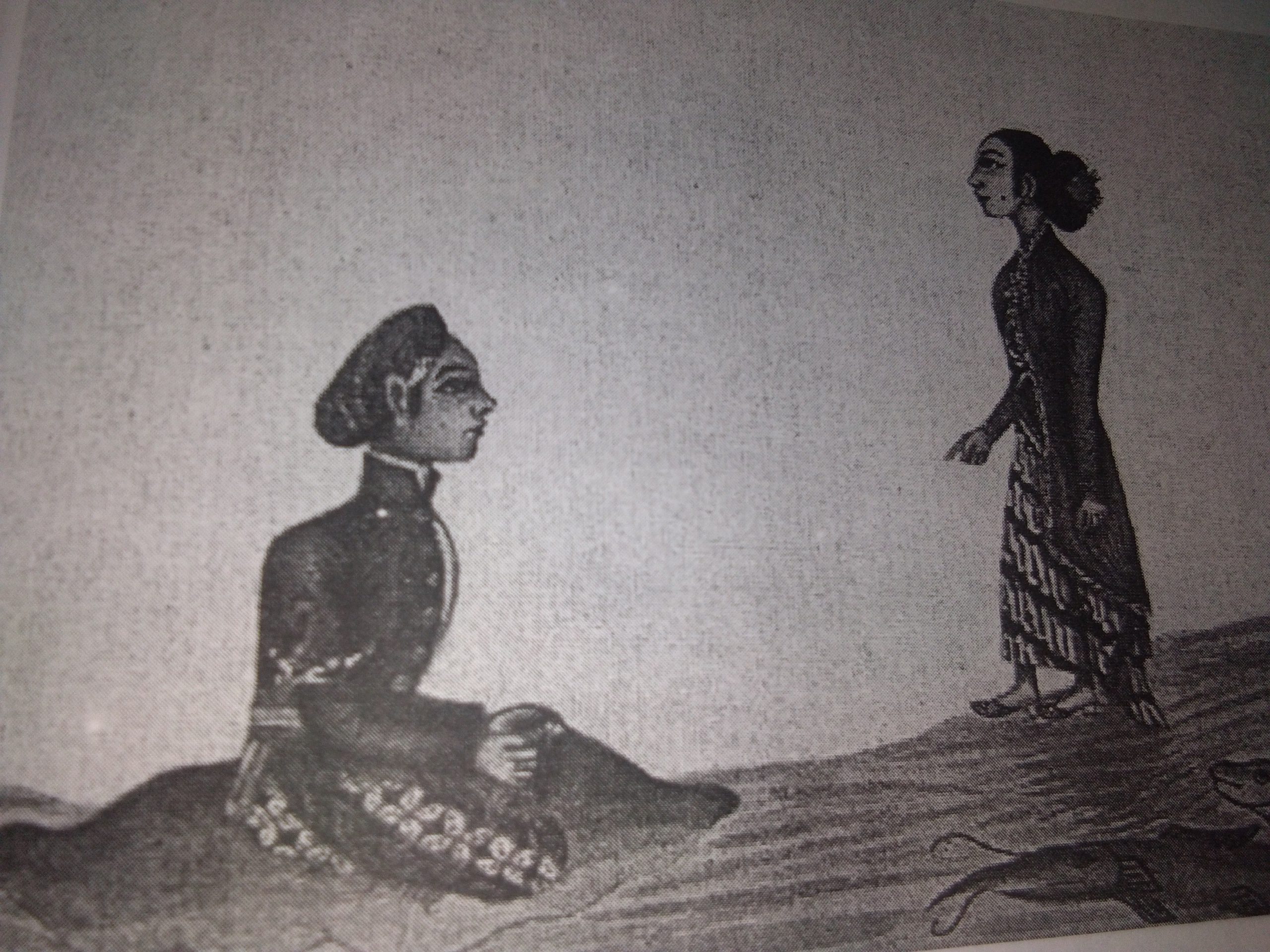
Picture 2. Less or more five hunreds years ago, initiated by their ancestors, Panembahan Senopati. Islamic-Mataram kings made an annual fullfilled-mythical travel towards the Southern-coast. ( The images displayed an invisible encounter between a legendary ruler of Islamic-Mataram Dynasty, Panembahan Senopati and Southern-ocean goddess, Kanjeng Ratu Kidul in a Javanese pain).
History and myth are often wonderfully interwinted. Although the travel of senopati was fulfilled a doubt with the myhtical flavors of the story. However, no one disproved that his travel to the northern coast was a true story. Even his descent followed his action and considered its an annual tradition of kingdom. Sultan Agung, Amangkurat I up to Diponegoro, a Yogyakarta prince in the nineteenth century that was considered as the repsentation of pious muslim prince, also made a annual travel to the Southern-Coastal.
Concerned an encounter the king with the Southern Ocean ruler, Kanjeng Ratu Kidul. It seemly was a created intentionaly myth as a legistimation for the power. Kanjeng Ratu Kidung symbolised his loyalty of whole southern-ocean under Senopati as mentioned in the availaibility of Kanjeng Ratu to give his the help for the continuity of Senopati’s kingdom that in the same time was competing with the rich and proper Northern-coastal kingdoms such as Surabaya, Gresik, Tuban, etc. After from the competence with Northern coastal rulers, Senopati still continued to defend the new kingdom from raids of his ex-employer, Sultan Pajang.
Conclusion
What is described above seems to be an affirmation that the old-tourism or the special-purpose travel is multifaceted. There are many factors which contribute to the way different people define the special-purpose travel. Trading and power play a role in the stimulation of ancient Indonesia to travel that it becomes one of basis for the rise of Indonesia tourism in the future-years.
Daftar Pustaka
Hannigan, Tim. A Brief History of Indonesia. Jakarta. 2015
Achmad, Sri Wintala. Babad Tanah Jawa. Jogjakarta. 2013
Burger, Herman. De Garoeda en De Ooievar. Leiden. 2011
Cortesao, Armando. The Summa Oriental of Tome Pires and The Book of Francisco Rodrigues. 1994
De Graaf and Pigeaud. De Eerste Moslimse Vorstendommen op Java. Gravenhage. 1974
Rubotic, Branislav. Special-Purpose Travel in Ancient Times:”Tourism” before Tourism. Belgrade. 2014.
The emerging of Bandoeng Vooruit in 1925 marked a turning point in the development of natural tourism in Bandung, for it provided a modern tourism management by building of road, hotel, promotion, etc. As result, it was during the period from 1925 to 1942 Bandung enjoyed prestige as one of most important destination in the colonial Netherlands Indies Empire, when thousands of Europeans Japanese and Australians tourists flown heavily to spend them days in the foggy and green mountains.
This article examines the development of natural Tourism in Bandung from 1925 until 1942 following the collapse of the colonial Netherland Indies Empire in 1942. When Dai Nippon troops marched into Bandung, the center of empire, it was ending three hundreds and fifth years the horrible Dutch occupation. To understand how the natural tourism in Bandung rose and developed. We will explore these questions: (1) What Visiting Before Tourism gave a root on tourism, and what consequence came of its for the advance of Bandung natural tourism in tomorrow days? (2) How did the development of natural tourism in Bandung as long as seventeen years from 1925-1942?
Visiting Before Tourism
West Java, before twentieth century, was unimaginable area due to its unaccessible. It was occurred because of its own mountains and hills mounted between limpid rivers as well as black swamps to separate the region from outside world. No wonder, the name Priangan was attributed which refers to remote and mountainous lands. Besides, the southern lands of Priangan almost uninhabited. According to one interpretation, the lands in the region had become wild and uninhabited. This recalled the social disruption following the fall and eventual destruction of the pre-colonial Hindu state of Pajajaran.[1]
But in the end of sixteenth centuries, the world of West Java gradually changed in consequence of foreigner expeditions. It was a starting point in the natural tourism. And The Portuguese was pioneer. Although for next centuries, Dutch take control them role and it played important role in performance. The first adventurer of Portuguese visiting West Java was Joao de Barros In 1522. When he took part in a Portuguese Expedition under Henrique Leme sent by Jorge de Albuquerque, “Kapitan Malaca” for commercial. Expedition had succeeded to reach Sunda which was welcomed by Samiam, the King of Sunda.[2] When the fleet was at anchor in the port of Sunda. Barros immediately adventured to explor the part of North Coast of West Java. In adventure, Barros zealously made the narration of West Java condition including custom, geographies, society, etc,
Yet, Barros explored the part of North Coast of West Java and he hardly ever visited the interior of hilliness and mountainous West Java. After the advent of Barros, there were many Portuguese landed in West Java. But same as Barros, they preferred to explore the Northern Coast of West Java. However, for centuries the Southern part of West Java was still an unimaginable and forgotten area.
In 1677 when Mataram as the ruler of West Java was more and more weak, the region was transferred to VOC. But this did not changed condition. West Java only that the Nothern Coast of West Java was still considered to be unavailable. Apparently, Dutch designedly forgot the region. For the lack of initiative knew to be further. Dutch only made the region as buffer state between two great power, the Sultanate of Banten which was still courageous on Western and on Eastern, the Sultanate of Mataram was more and more become old. But when Batavia was more and more stuffy, VOC began looking the interior of West Java as a solution. Some of Expeditions was sent. The first expedition was begun when Francois Valentijn, a VOC priest visited the interior of West Java. That was the early visit of Europeans to the interior of West Java. For years later, Valentijn narrated him experience by a book, Oud en Nieuw Oost-Indien in 1724.[4] Stories of Valentijn many described the statistic populations and geographical condition of West Java Interior. In narration, Valentijn phrased dessa dessa laid on Krawang river.
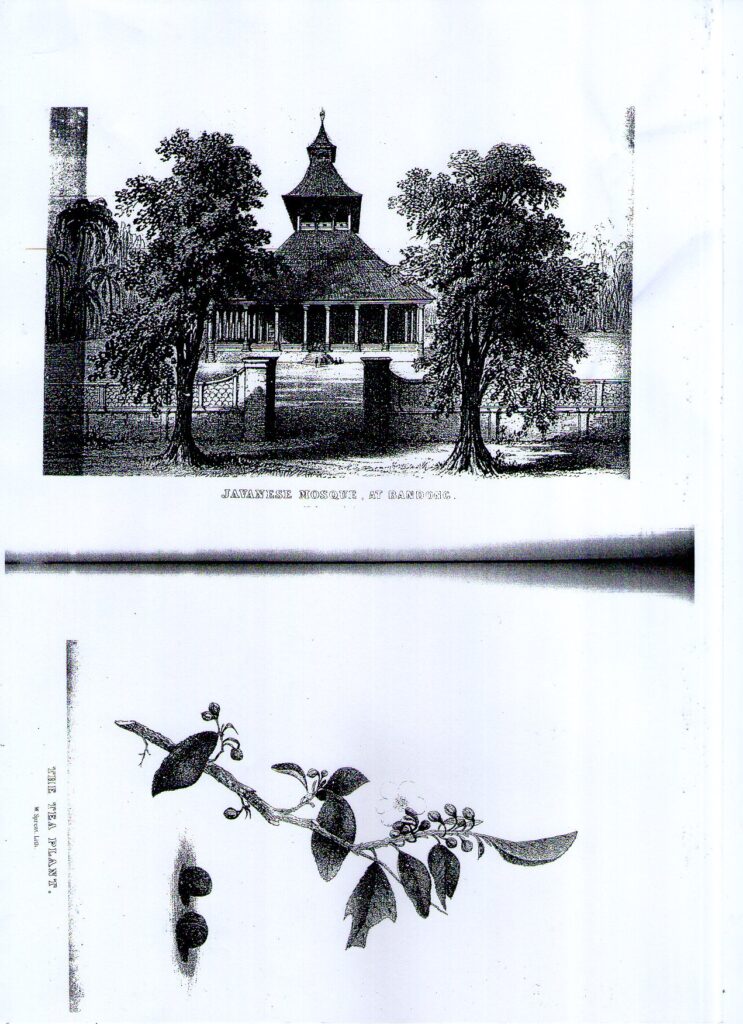
Picture 1. The Great Mosque of Bandung in 1850 and The Tea Plant in Charles Walter Kinloch’s Litography.
One hundred years after the adventure of Valentijn, the other illustrations of West Java interior, we found from the story of Charles Walter Kinloch or Bengal Civialian, a British visiting interior of West Java in 1852.[5] Kinloch narrated playfully him experience day in day out for ten days which made him narration to be more attractive than the predecessor, Valentijn who rigid. Kinloch described that Bandung was a beautiful place although it was not as wide as Cianjur. Its cold air and climate remembered him on the city of Montpelier in France. Kinloch enjoyed him travel. In visited places, he made lithographies which was one of Masjid Agung Bandung lithography. Kinloch wrote all of it with so delighting. Yet sometimes he was forget to call visited place names so that reader was ever so often made to be confused. Though him description was so detail. As example, the description about waterfall in Bandung,
The Birth of Bandoeng Vooruit
The adventurism narrations of Barros, Valentijn, and Kinloch had changed wild and frighten shadow of West Java interior replaced by a wonderful imagination of exotic West Java interior. Its beautiful lakes, green and foggy mountains and hills, and limpid rivers were presented in their narration. Interested by those exotic narration, since the late nineteenth centuries thousands of Europeans flooded the West Java interior. They tried to prove the truth of Barros, Valentijn, Kinloch, by created myths. For the region, those floods of Europeans was extremely beneficial. And as if those benefits was more and more beneficial, when the railway, the Groote Post Weg, and telegraph network was built in the end of nineteenth centuries. As time passes, those floods of Europeans was more and more uncontrollable. This brought upon a problem. In 1925, a group of Dutch took an initiative by the building of tourism managing organization, Bandoeng Vooruit.
Started with this birth of Bandoeng Vooruit, West Java interior in particular Bandoeng changed from the remote and wild area towards the most modern tourism area of Netherlands Indies. His birth became a limit line between visiting before tourism and the activity of modern tourism. Made no to magnify the role of Bandoeng Voouit, other organizations also played role in tourisme activities although them activities was not as large as Bandoeng Vooruit.
To manage tourism activities, tens of tourism packets to West Java interior was presented by Bandoeng Voouit. And the tourism packet of Gunung Tangkuban Perahu dan Gunung Papadayan was favorite. Coincide with the offers of tourism packets, the picture of limpid Patenggang lakes, cool Citarum rivers, Burangrang green mountains, the sound of Dago waterfalls as well as Manglayang foggy hills was published in the tourism guide and tourism magazine. To give a comfort for tourist, all of those tourism spot was equipped with ways of being covered with asphalt, and comfortable hotels. As the consequence of it, the story of West Java wild and frightening interior was barely heard. On the contrary in that time, its natural beautifulness and coolness was many mentioned.
The activities of modern tourism 1925 – 1942
Promotions
To be so lucky for West Java, Bandung Vooruit was exactly established when West Java in particular Bandung was bed of down for Europeans. Its pleasantness was not only as a settlement but also as a promising tourism destination. For some of people, this was absolutely a beneficial business. Pioneered with the tourism guide book, Ons Java published by Nederland en Rotterdamsche Llyod in 1920s, tens of tourism guide book were on the scene. Bandoeng The Mountain City of Netherlands Indies (1925), Gids van Bandoeng en Midden Priangan, Gids van Bandoeng en Midden Priangan (1925), Tourist Notes (1934).
From week to week until year to year, West Java with its foggy and green mountains reaching into sky as well as the sound of waterfall cleaving the solitude and limpid lakes embellished with water lilies colored page by page those tourism guide books. No different with performed pictures, created narrations was written to be truly wonderful. When reader had dissolved in those hammock of narrations, narration will bring readers on a curious feeling. As a proof from Bandoeng The Mountain City of Netherlands Indies we take example about a description of Citarik Waterfall,
A very beautiful waterfall which can be reached entirely by motor car is that of the Tjitarik. This is reached by driving to Tjilengka for which one hour is necessary. On arriving at the aloon aloon one turns left after which the road climbs steadily until the tea estate “Sindangswangi” is reached. After having driven for half an hour an before reachs this estate, a shelter is to be seen from where a beautiful view of the waterfall can be obtained. It is here also possible to descend to the foot of the fal[7]l
When tourism guide books offered a promising business, on the contrary, the government looked on the other opportunity. Pulled by the increasing demand of post card, it stimulated the government on a creative promotion. That creative promotion tried to perform the nature of fascinating West Java as the background of post card, where dense mountains and beautiful lakes still become the primadona. No wonder, at short notice, the thousands of post cards had published in 1930.[8]
Accomodations
Stimulated by promotions succeesly to interest the visit of tourist to West Java. Hundreds of accomodation spots immediately was built scattering around tourism natural spots in the green and foggy Priangan Plateau. Those accomodations included extravagant, comfortable, and fascinating hotels and Pesanggrahans that laid on the limpid watering lakes. At end of nineteenth centuries until the early of twentieth centuries, when a smell of intoxicating sulphur on the side of legendary Kawah Putih and a bulk of up-side down boat resembling high and fertile soil which was named Gunung Tangkuban Parahu by Sundanese, was so interesting for Europeans, the number of hotels quickly increased as fast as the advance of this plateau.
At heart of Daendels dreamed city and exactly on side of muddy river of Citarum as well as stood before legendary way of Groote Post-Weg, Savoy Homan and Preanger was existed. Until mid-twentieth centuries, both hotels take possession of first rank hotels in colonial Netherlands-Indies Empire. It provided modern, extraordinary and luxurious service. When Europeans flooded the plateau of cold Bandung, both hotels was wrested by them.[9] Not far from classic Savoy Homanan and Preangers hotel laid on around the heart of Bandung, there were Wihelmina, Societiet Concordia, and Du Pavillon. They were middles-class hotels pale beside with Homann and Preanger.[10]
No different with Savoy Homann and Preanger in luxury and comfort, Villa Isola performed itself as most luxurious and modern hotel in this area. When whole side of Bandung were still as dark as the other interior, the light of blazing lamps of musical performance as well as ball room dance and the musical performance able to bright those darkness. Unsuspected by those light of lamps, a hundred of American tourist visited it.[11] Meanwhile laid on the plateau of cold and white foggy Lembang, outspread along the road toward the harmoniously Tangkuban Perahu, Hotels, Bungalows, and Passanggrahan that providing a sight of beautiful and green mountain was fragmented there.[12]
Not left behind Dutch comfortable and luxurious Hotels, Chinese communities built a dozen of hotels scattered across the hot and musty Pasar Baru, dusty Kebon Jati until the curve rising road of Gardu Jati. At least there are 22 chinese hotels. It was not as luxurious as and as comfortable as than Europeans hotel. But can be proud that their hotels able to compete with luxurious Europeans hotel.
The Place of Tourism
The century since Kinloch had made his notes, the natural tourism of Bandung had interested the attention of heterogeneous European. The unique and exotic form of green Tangkubang Perahu and the side of engagingly and limpid Patennggang Talaga had been legendary in the European eye. Yet those attention was immediately disappeared when the steep and rock slopes of hills and mountain, black swamps, and horrible dense forest scattered along the Priangan plateau. Unimaginable previously in the future this horrible area would be fated to be one of foremost natural tourism destination in the colonial Netherlands Indies Empire. In the mid-second decade of twentieth centuries, the story changed as dramatic as a telenovela cinema. Preceded by the build of Bandoeng Vooruit by beautiful Tangkuban Perahu toward road means, Natural Tourism objects experienced a golden age where era will never come back in tomorrow days.
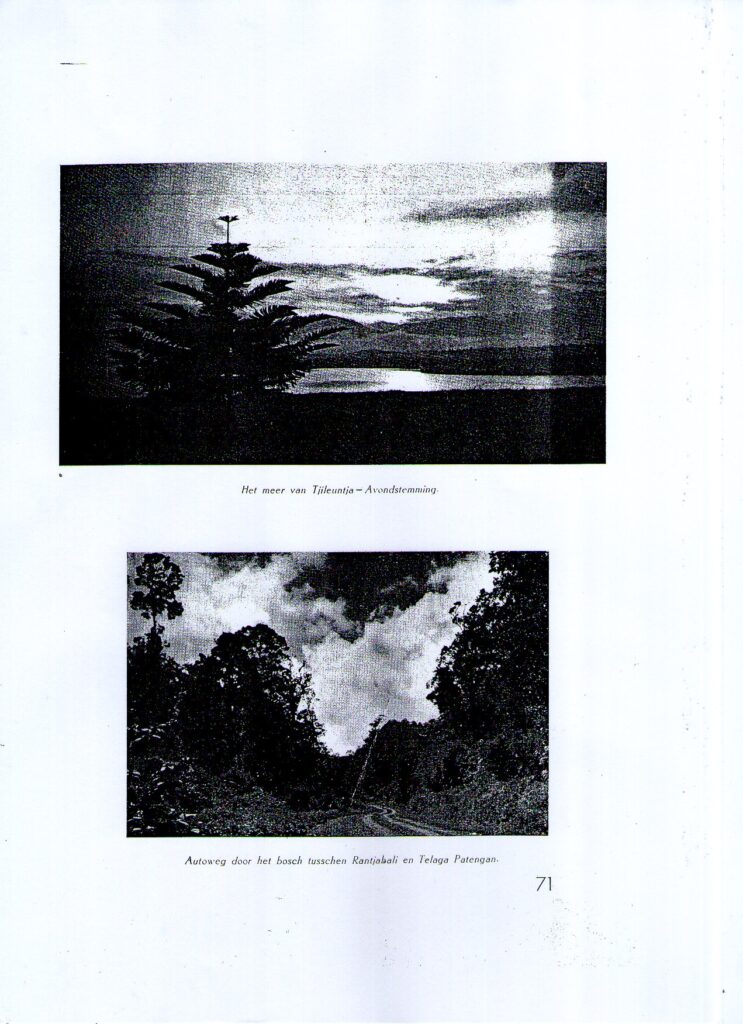
Picture 2. a street towards Rancabali and Patengang’s Lake
With a horde of limpid and quiet lakes, as well as a range of green and white foggy hills and mountains together with the hot and steaming craters, the South Bandung provided an eye cooling sight. There were kawah putih with a smell of intoxicating sulphur which was residing a white ghost of tiger in native legends. As beautiful as Kawah Putih more or less 50 km from the heart of mountainous city, Bandung, slipped between the green carpet of tea plantation, Talaga Pategang performed shown face before the Ciwidey muddy road. Not far away from it, a bulk of old mount Patuha, stand on the height of less 1500 meter above the sea level.
Not different with the Southern Bandung area, a range of unique and fabulous mountain interacted each other. Lead by the mysterious mount of Tangkuban Perahu, Burangrang mount, Dago hill followed behind. Inadequate with those mysterious mounts, the sound Curug Layung of water flew in a small stream to be very interesting for tourist or adventurer. Additionally exact below it, warming up and cooling down, the bathing place of Tjipanas provided a warming place in the cold mountainous air.
In the end of Eastern Bandung not as interesting as Southern Bandung and Northern Bandung, stretching along the legendary “Groote Post Weg” and standing before the old Sumedang and exotic Garut, the old and short hill of Manglayang was a pleasing place for ascent. Even as long as 1936, its peak was ascended by tourist hundreds.[13]
Close resemblance as exotic as natural tourism spots of Southern and Nothern Bandung, scattered along the dusty limestone and laid before the Daendels dreamed road, Groote-Postweg, the Western Bandung was still as beautiful as when Kinloch had been visited 75 years ago. There are the landscape of remote and hilly Curug Malela in the wild Gunung Halu interior. It was rounded by the green and fragrant tea plantation. In same area as far west as from Curug Malela, less than 1 km from De Groote Postweg, hidden between mysterious caves, here Sanghyang Tikoro slipped. Legends mentioned that this was point where the old bandung lakes broken down since less than thousands years ago.
Tourists
They had sighted the city when they were still far out at road. A green stain stretching out across the horizon of the Priangan Plateau. Over the course of the morning, a range of mountains rearing inland under banks of creamy cloud, and a strip of slope under an infinite rank of larch. Eventually, the train entered into railway station. As the tourists reached down from wagon and embarked on the first travel after a day at train. One of tourists looked out on the scene, noting its detail in his formidable memory. He was M Mcmilan, a Britania Tourist.[14]
By the time before the M Mcmilan arrival the Bandung had interested attention since the early nineteenth century. Forged of a strip of European done visits and adventures, it had swiftly been known by strange tourists. Year by year, they spilled out from its Australian, European, and Japanese wellspring, flooding the Tangkuban Perahu mount and the Talaga Patengan, seeping up into the Curug Malela, leaching across Papandayan Mount.
Its peak in the period of 1925 until 1942, when thousands men had come lumbering the hilly and mountainous Bandung from the multi-ethnic backgrounds included the Japanese who slant eyed, blue eyed and high postured Europeans, the mixed race Indo-Europeans until a number of native aristocrats.
Conclusion
Started by the curiosity about a mysterious land stretching from west to east, laid behind the old and tropical Batavia, and well walled firmly by a range of foggy and creamy clouding mountain and hills, and its below flowing swiftly as swiftly as cobble stone following it, tens adventurer bravely penetrated into the land. They did not realized that their adventure would bring on a great consequence in tomorrow. When legendary stories able to change that mysterious land into one of foremost natural tourism destination in the colonial Netherlands Indies empire. Undoubtedly even more important was the stories of natural tourism spot discovery that wild, unhabitated, and horrific Bandung immediately was replaced by its limpid rivers and lakes as well as exotic craters. Soon after those legendary stories swiftly spilled out from its Bandung wellspring, filling the Dutch and other Europeans mind, seeping up into Japanese ears, leaching across into American, finally, Bandung was flooded by foreign tourist coming as fast as those legendary stories into their ears.
By the dawn of the early twentieth Bandung was undergoing a formidable change in complexion, when a group Dutch created one of the most influential organization in the History of Netherlands Indies, Bandoeng Vooruit. Natural tourism spot from Bandung had been finding their way into one of main tourism destination in colony or the world. Pulled by extended promotions as well as hotels, and passanggrahan that scattered between beautiful tourism spots along with the flooding visits, within a decade since Bandoeng Vooruit establishment in 1925, Bandung had been set up as a modest destination of tourism.
[1] Jan Breman. Mobilizing Labour for the Global Coffe Market Profits From an Unfree Work Regime in Colonial Java. (Amsterdam: Amsterdam University Press, 2015). hlm. 17
[2] Claude Guillot. Sejarah dan Peradaban Abad X – XVII. (Jakarta:KPG, 2008). hlm. 32
[3] Joao de Barros. Da Asia De Joao De Barros Dos Feitos, Que Os Portuguezes Fizeram No Descubrimento, E Conquista Dos Mares, E Terras Do Oriente, Decada Quarta, Parte Primeira. (Lisboa: Na Regia Officina Typografica, 1527). hlm. 77
[4] Francois Valentijn. Beschrijving van Groot Java Of Te Java Major. Vierde Deel. (Amsterdam:Joannes van Braam, 1724). hlm. 9
[6]Charles Walter Kinloch, Rambles in Java and The Straits in 1852, (Malaysia:Peter Chong Printers). hlm. 58.
[7] Reitsma, Bandoeng The Mountain City of Netherlands Indies, (Batavia:G.Kolff & Co, 1925), hlm. 44Reitsma en Hooglands, De Gids Bandoeng en Midden Priangan, (Bandoeng:N.V Mij Vorkink), hlm.
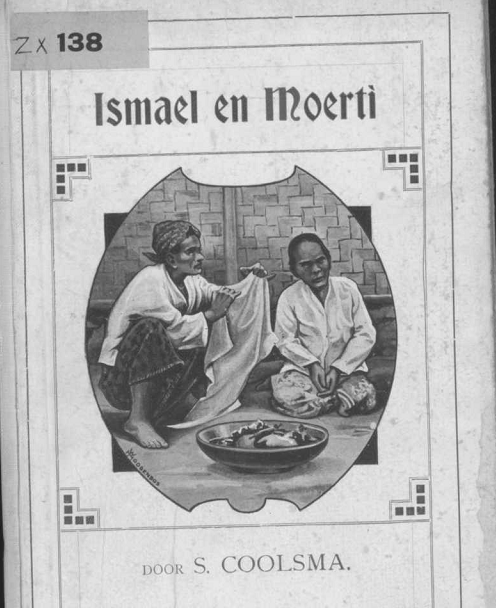
Buku Ismail En Moerti yang saya terjemahkan di bawah ini, mengisahkan tentang kegiatan missionaris yang bekerja di Jawa Barat di abad ke 19. Coolsma, sang penulis buku ini adalah salah satu dari missionaris yang bekerja disana. Sementara itu, nama Ismail dan Moerti, sebagai nama dari judul buku ini merujuk pada dua orang dari suku Sunda yang terpanggil dan tercerahkan oleh panggilan agama Kristen melalui kegiatan Misionaris yang dilakukan oleh Coolsma dan kawan-kawannya sesama misionaris. Di bawah ini saya akan menghadirkan terjemahan dalam buku itu, yang mana saya publikasi dalam beberapa bagian,
Terjermahan
Orang-orang membagi pulau Jawa ke dalam dua bagian, dari ukurannya yang berbeda, Jawa Barat dan Jawa Timur. Di sebelah utara, perbatasan kedua wilayah ini terbentuk oleh sungai Losari dan pada wilayah bagian selatan, sungai tandoei (Citanduy) menjadi pemisah keduanya. Wilayah pada sisi sebelah timur dari kedua sungai itu dikenal sebagai Jawa Timur, sedangkan sisi sebalah baratnya lebih sering disebut sebagai Jawa Barat. Penduduk pribumi menamakan wilayah timur dengan sebutan Jawa, sedangkan nama Pasundan untuk wilayah yang terletak di sebelah barat. Maksud dari nama Pasundan sendiri ialah “Negeri Sunda”, akan tetapi pada kenyatannya apa yang orang-orang pahami tentang Sunda sangat tidak jelas, terkadang orang-orang hanya menerka-nerka, karena memang tidak arti yang jelas, oleh karenanya kita tidak akan membahas masalah yang kurang penting ini disini.
Pulau Jawa memiliki luas wilayah hampir 2300 mil persegi, yang mana sekitar 865 mil persegi dari wilayahnya adalah Jawa Barat. Jumlah penduduknya sendiri di akhir tahun 1905 hampir 29 juta jiwa dan sekitar 7 juta diantaranya menempati wilayah Jawa Barat. Daerah yang disebut terakhir ini akan kita tampilkan pada pembaca. Kita akan mengenalkan mereka pada negeri Sunda. Negeri Sunda, sebuah wilayah yang meliputi karesidenan dari provinsi Batavia (Jakarta), Bantam (Banten), dan Karesidenan Priangan dan juga Cirebon. Dahulu Karesidenan Karawang juga termasuk di dalamnya sebelum wilayah ini digabung dengan Batavia.
Di Karesidenan Priangan kota Cianjur terletak, dapat ditemukan dalampeta kecil. Dalam buku ini kota ini akan dibahas secara spesific dan kami akan mengenalkannya kepada para pembaca. Nama Cianjur berasal dari nama aliran air pegunungan kecil, dimana leluhur orang-orang Sunda bertempat. Seluruh tempat di Negeri Sunda terletak pada tepian sungai. Maka tak heran, ibukota Priangan yang luas dan indah, Bandung terletak pada sungai Tjikapundung, juga Sumedang dengan sungai Cipelesnya, Buitenzoeg (Bogor) dengan Cisadane, Indramayu dengan sungai Cimanuk, dll. Kota pantai Batavia dan Cirebon sendiri terletak pada tepi sungai: Batavia dengan Ciliwungnya, Cirebon dengan sungai Cirebon, yang mana memiliki nama yang sama dengan kota Cirebon sendiri.
Pada satu waktu, Cianjur sangat sulit untuk diakses. Kendaraan paling cepat dan terbaik ialah dengan menggunakan sebuah pedati (sebuah gerobak dengan ditarik empat buah kuda post), orang menghabiskan waktu dua hari perjalanan dari Batavia untuk mencapai kesana, Jawa merupakan suatu negeri pegunungan. Orang-orang suatu waktu bisa memiliki pantai, yang mana dibelakangnya terdapat turunan dan tanjakan. Hal inilah yang menjadi cikal bakal julukan Swiss Hindia pada wilayah Priangan. Akan tetapi sekarang, orang-orang bisa mencapai pendalaman secara leluasa dan lebih cepat juga lebih mudah, dengan ongkos yang kurang lebih murah. Orang-orang bisa menggunakan kereta api di pagi hari dan tiba di Cianjur pada siang hari melalui Depok, Buitenzorg (Bogor) dan Sukabumi.
Cianjur adalah suatu kota yang unik, disamping kota ini juga sangat bernuansa Sunda. Cianjur terletak dalam suatu lembah, walaupun ketingginnya hampir mencapai 1600 kaki di atas permukaan laut. Jalan Post Besar yang terkenal melintas ditengah kota, jalan ini saling terhubung dan tersambung dengan jalan lainnya yang luas dan indah. Orang-orang juga akan melintasi suatu gerbang kayu tanpa pintu jika memasuki Cianjur baik dari sisi perbatasan Bandung maupun Buitenzorg. Sepanjang jalan berdiri warung-warung yang mana di tempat warung warung itu berdiri, orang-orang akan mendapati jalan pagar tanaman tinggi dengan semakbelukar hijau. Kampung-kampung itu juga terhubung dan tersambung dengan jalan-jalan kecil dan nama satu jalan itu ialah Jalan Kompa. Asal usul nama jalan ini sendiri dapat ditelusuri dari pemerintahan orang-orang Eropa yang membuat pompa pemadam kebakaran sebagai langkah antisipasi andaikan terjadi sebuah kebakaran di bagian dalam pemukiman itu. Rumah-rumah terbuat dari bahan ringan, sehingga api besar mudah melalap. Di samping kota ini sangat nyaman, keunikan Cianjur lainnya ialah hampir setiap orang memiliki kolam, dimana ikan emas dan ikan-ikan lainnya ada di dalamnya. Kolam-kolam itu sehari-hari tanpa diberi makan masih tetap hidup berkat air yang berlimpah tiada henti-hentinya.
Sebagaimana kota-kota di Jawa, ditengah-tengah kota ada tempat tinggal raja, bupati atau kepala distrik, juga alun-alun, dimana orang-orang mengenalnya sebagai sebuah tanah lapang berumput, dengan luas dan lebarnya sekitar 160 passen. Pada sisi sebelah barat, terdapat sebuah Masjid, sedangkan pada sisi sebelah selatan berdiri tempat tinggal bupati, kepala tertinggi pribumi (yang membawahi sebuah kabupaten). Lalu dari arah sebelah timur terdapat suatu tembok berpagarkan tanaman dan pemukiman orang-orang Eropa terletak pada sisi sebelah utara. Kemudian di sekitar terdapat suatu lapangan yang tertutupi dengan pophon-pohon beringin tinggi. Bagunan-bangunan tidak banyak dijumpai di Cianjur. Orang-orang hanya menjumpai dalem (Istana atau pendopo) Bupati, tempat tinggal asisten residen kepala pemerintahan setempat, dengan gedung-gedung perkantoran di sampingnya. Lalu sebuah kantor pos dan telegraf, sebuah hotel sederhana, rumah sakit, penjara, masjid yang telah disebutkan di atas dan sejak beberapa tahun belakangan ada sebuah stasiun kereta api. Disii juga kita memiliki sebuah bangunan penting yaitu gereja Zending. Gereja Kristen pertama ini dibangun khusus bagi orang-orang Sunda, dan para penduduk serta pengunjung kota. Didalam bangunan juga terdapat sebuah tugu peringatan keberadaan Zending. Bagaimana hal ini (terutama zending) bisa muncul disini dan bagaimana bisa membangun gereja,kita akan menceritakannya sekarang pada bagian pertama.
After Nederlandsche Zendingsvereeniging (Perkumpulan Zending Belanda) didirikan di tahun 1858, dan seiring berjalannya waktu, mereka bisa menunjuk wakil mereka, dan mereka membuat tiga titik pengamatan di Tanah Sunda. Meskipun sejak 23 Juni 1596 orang-orang Belanda telah membangun suatu relasi dengan Jawa Barat. Namun tidak ada satu pun perwakilan pemerintah di wilayah terkecuali di Ibukota Batavia dan daerah perkebunan Depok yang bertetangga dengan Batavia, serta ajaran Kristen pun tidak pernah dikhutbahkan. Apalagi pasa sisi yang lainnya, Islamtelah meresap ke dalam kehidupan masyarakat dan keluarga. Para penasihat yang berbeda dari Perkumpulan sekarang merasa bahwa kondisi itu tidak lagi harus diteruskan. Apalagi di waktu yang sama pemerintah juga mengalami kesulitan menghadapi para pengkhutbah Muslim. Orang-orang tidak lagi harus merasa susah dan membuat komitmen yang serius dengan perintah Tuhan: “Khutbahkanlah Injil pada seluruh alam” dan kemudian terlihat betapa Hindia Belanda memprihatinkan, oleh karenanya Tanah Sunda harus berada dalam genggaman. Meskipun saat sebagaimana kita ketahui, sering dikatakan bahwa “sebagian besar rakyat Hindia-Belanda adalah muslim dan ini sangat sulit untuk menang (Dalam pengoversian mereka).” Tapi biarkanlah kami pertama-pertama merubah para penyembah berhala. Orang-orang ini masih bisa ditemukan di wilayah-wilayah terluar, sebab kita harus segera mungkin mengonversi mereka sebelum mereka menjadi muslim; Para pagan ini juga suatu waktu bisa kita gunakan sebagai alat untuk menangkal atau mengusir orang-orang Muslim.” Saat ini diektahui, bahwa 29 juta penduduk Jawa adalah muslim. Begitu juga dari 4 juta penduduk wilayah luar (luar Jawa), dua juta diantaranya muslim. Sementara sisanya sekitar 2 juta jiwa adlah para pagan atau penyembah berhala, yang mana mereka terdiri dari penduduk Bali dan Lombok yang memeluk agama Hindu, belum lagi menurut pengamatan Perkumpulan Zending Utrecht masih ada orang-orang belum tersentuh khutbah Injil maupun Islam. Kemudian jumlah dua juta dikurangi sehingga tersisa sekitar satu juta orang penganut animisme yang terbagi dalam suku terpencil dan tersebar. Cara yang baik harus diusahakan, yang mana Zending hanya mengawasi tanpa perlu membuat suatu perhitungan dan argumentasi yang rasional, tetapi tetap permhonan secara serius harus meminta penerangan dan arahan Kepala Zending, juga tak lupa kepada para tetua perkumpulan Zending Belanda. Hal itu dilakukan untuk memperoleh perintah yang mana dia akan berikan. Lalu ketika seluruh penasihat baik diminta maupun tanpa diminta, diperlihatkan Jawa Barat. Pemerintah memutuskan bahwa Pimpinan Perkumpulan menyerukan bahwa harus dilakukan pengkhutbahan Injil diantara orang-orang Sunda. Dalam perkara ini juga ditegaskan bahwa Perkumpulan Zending Belanda (Nederl. Zendingsvereeninging), sejak itu diputuskan bekerja mengkhutbahkan Injil di Tanah Sunda, tidak pernah ingin berpindah pekerjaan lain, meskipun dia telah didesak untuk melakukannya beberapa kali dan sehingga bidang pekerjaan ini kelak telah terbukti menjadi salah satu misionaris yang paling bersyukur (setidaknya untuk saat ini). (Bersambung)